A Deep Dive into Washed, Natural, and Experimental Methods for Specialty Roasteries
Published by Java Aroma Trade • Specialty Coffee Insights
When sourcing green coffee beans, specialty roasters often look beyond region and altitude to examine a critical factor that dictates flavor: the post-harvest processing method. While the fertile volcanic terroir of the Kerinci Highlands provides an exceptional foundation, the way coffee cherries are processed after harvesting transforms that potential into the distinct notes found in your cup.
As an integrated single-origin supplier based in Jambi, Sumatra, Java Aroma Trade applies strict post-harvest controls to bring out the finest characteristics of Kerinci coffee. Here is a closer look at how different processing methods shape the flavor profile of Kerinci Arabica.
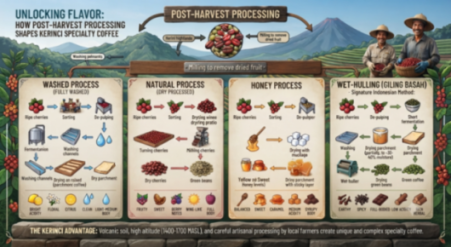
1. The Washed Process: Clarity and Elegance
The washed (wet) process is designed to highlight the pure, unmasked characteristics of the coffee bean’s origin.
- The Method: After harvesting ripe red cherries, the pulp and mucilage are completely removed through depulping and washing before the parchment coffee is dried.
- Cup Profile: This method yields a cup with high flavor clarity, a bright and vibrant acidity, and an exceptionally clean aftertaste. It is highly favored by specialty coffee lovers who prefer clean, crisp filter coffees.
2. The Natural Process: Bold Body and Fruit-Forward Notes
For roasters seeking intense sweetness and complex fruit characteristics, natural (dry-processed) beans offer an entirely different sensory experience.
- The Method: Whole coffee cherries are dried directly under the sun on raised beds or patios before the dried fruit hull is mechanically removed.
- Cup Profile: Natural process green bean Kerinci delivers a heavy body, robust fruit-forward flavor complexity, and prominent natural sweetness. It serves as an excellent base for modern espresso blends as well as rich manual brews.
3. Honey and Experimental Processes: Innovation in Every Batch
In response to the growing demand for unique, limited-release offerings, experimental and honey processing methods have gained massive popularity among global roasters.
- The Method: Part or all of the sticky mucilage is left on the bean during the drying stage, often paired with controlled anaerobic or fermentation techniques.
- Cup Profile: This creates a unique flavor complexity, offering roasters an avenue to explore distinctive flavor notes that stand out on any specialty coffee menu.
B2B Note: Java Aroma Trade works hand-in-hand with local farming communities in Kerinci to ensure that every processing batch—from picking red cherries to optimal drying—is meticulously monitored.
Conclusion
Choosing the right post-harvest profile allows roasteries to tailor their product offerings to consumer preferences. Whether you prefer the clean clarity of a washed coffee or the bold sweetness of a natural process, partnering with Java Aroma Trade ensures you receive premium-grade Kerinci coffee green beans processed to international export standards.